Deramiocel Will Fail: A Scientific, Statistical, and Regulatory Teardown
| Field |
Value |
| Ticker |
CAPR |
| Market Cap |
$346M |
| Price (2025-10-31) |
$6.43 |
| Target Price |
~$2.16 |
| Downside |
–66% |
1. Executive Summary
Capricor Therapeutics (NASDAQ: CAPR) is a single-asset company developing deramiocel (CAP-1002), an allogeneic cardiosphere-derived cell (CDC) therapy for Duchenne muscular dystrophy (DMD). The Phase 3 HOPE-3 trial has completed, with topline data expected mid-Q4 2025 to support a BLA resubmission.
We are short CAPR. Our thesis rests on four pillars:
- Mechanism of action is scientifically implausible. CDCs do not produce dystrophin or address the root cause of DMD. Their proposed paracrine effects are transient, poorly characterized, and contradicted by the company's own preclinical data.
- Prior clinical evidence is weak and statistically compromised. The pivotal Phase 2 (HOPE-2) enrolled only 20 of a planned 84 patients, failed its prespecified primary endpoint under the original statistical model, and required a post-hoc reanalysis to claim significance. The larger ALLSTAR trial in cardiac patients was terminated for futility.
- The FDA has already rejected the Phase 2 dataset. A Complete Response Letter (CRL) was issued in July 2024, and senior FDA officials have been described as skeptical of the treatment.
- No pipeline diversification. StealthX and other exosome programs remain preclinical with no near-term catalysts.
Post-readout, we expect the stock to trade toward liquidation value at approximately $1.62–$2.16 per share, based on Q2 2025 balance sheet data.
2. Disease Context: Why the Mechanism Matters
DMD is caused by loss-of-function mutations in the DMD gene, resulting in absent or nonfunctional dystrophin protein. Without dystrophin, the dystrophin-associated protein complex (DAPC) disassembles, severing the mechanical link between the cytoskeleton and extracellular matrix. This triggers a progressive, multi-system cascade: sarcolemmal instability, calcium overload, satellite cell exhaustion, chronic inflammation, fibrosis, and ultimately irreversible muscle degeneration.
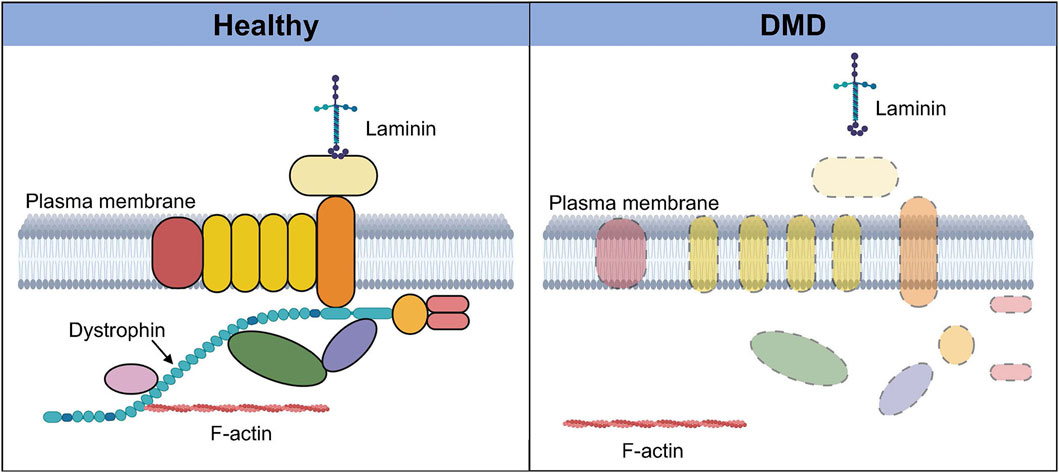
Membrane missing dystrophin
The critical therapeutic question is whether a candidate addresses the root cause (dystrophin deficiency) or merely modulates downstream consequences. Approved and late-stage DMD therapies illustrate this distinction:
-
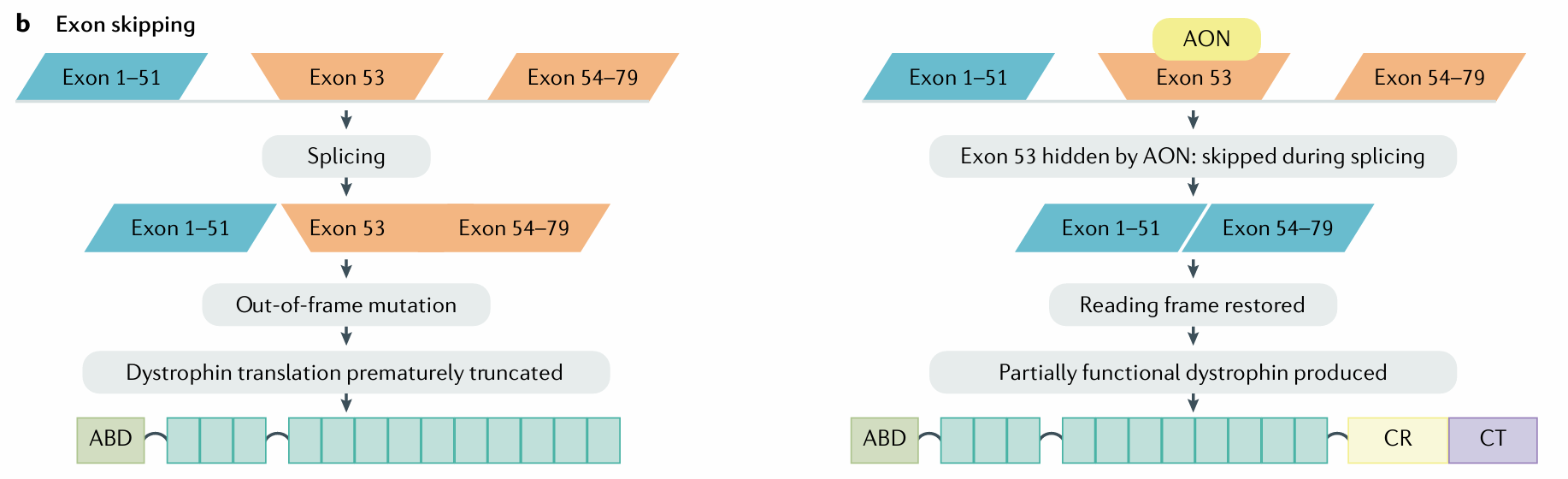
Dystrophin-restoring approaches (exon-skipping ASOs, AAV gene therapy) attempt to produce functional dystrophin, though clinical benefits have been modest and approvals largely based on surrogate endpoints.
-
Downstream modulators (corticosteroids, givinostat) slow progression via anti-inflammatory and anti-fibrotic effects but cannot reverse muscle loss.
-
Anti-fibrotic monoclonal antibodies targeting secondary cascades have failed: pamrevlumab (anti-CTGF) missed all primary and secondary endpoints, including PUL 2.0, in the Phase 3 LELANTOS program (FibroGen, 2024).
Deramiocel falls squarely in the downstream modulator category — but with a far weaker mechanistic rationale than any approved therapy.
3. Mechanism Critique: CDCs Are Not a Credible DMD Therapy
3.1 What CDCs Are
Cardiosphere-derived cells are stem-like progenitor cells isolated from human heart tissue, expanded in 3D culture, and characterized by CD105⁺/CD45⁻ surface markers — a generic mesenchymal, non-hematopoietic phenotype. They are administered as an allogeneic, cryopreserved IV infusion (150M cells per dose).
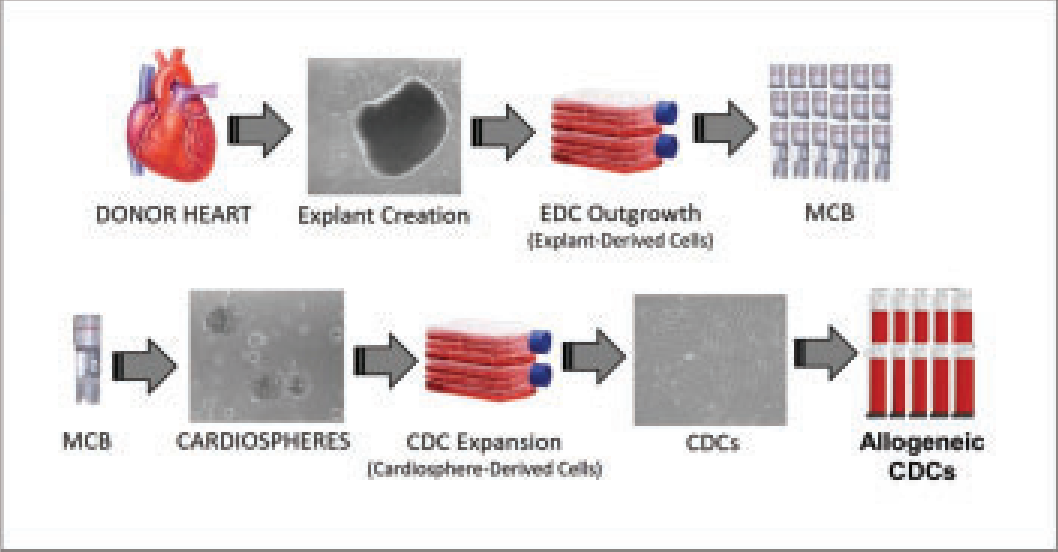
Capricor claims CDCs exert therapeutic effects through paracrine signaling: secretion of exosomes carrying microRNAs (miR-146a, miR-181b) and Y RNA fragments that reprogram macrophages toward anti-inflammatory and pro-regenerative phenotypes.
3.2 Fundamental Problems
CDCs do not produce dystrophin. They neither encode nor induce expression of the dystrophin protein. Their proposed benefit is entirely dystrophin-independent, relying on secondary immunomodulatory effects.
The paracrine hypothesis is poorly supported. Key evidentiary gaps include:
-
No published dose-response curve for exosomes (or their payloads) against target cell types.
-
CDCs are short-lived post-infusion; studies show nearly all infused cells exit circulation within minutes, with negligible engraftment at target tissues by 72 hours. This implies any effect is transient, consistent with the waning efficacy observed during treatment gaps in HOPE-2-OLE.
-
The company's own investor presentation (October 2025) labels a cytokine panel as "Anti-inflammatory," but the y-axis shows CXCL8 (IL-8) — a pro-inflammatory chemokine — with CDC levels far exceeding control. The chart lacks units, sample sizes, and statistical testing.
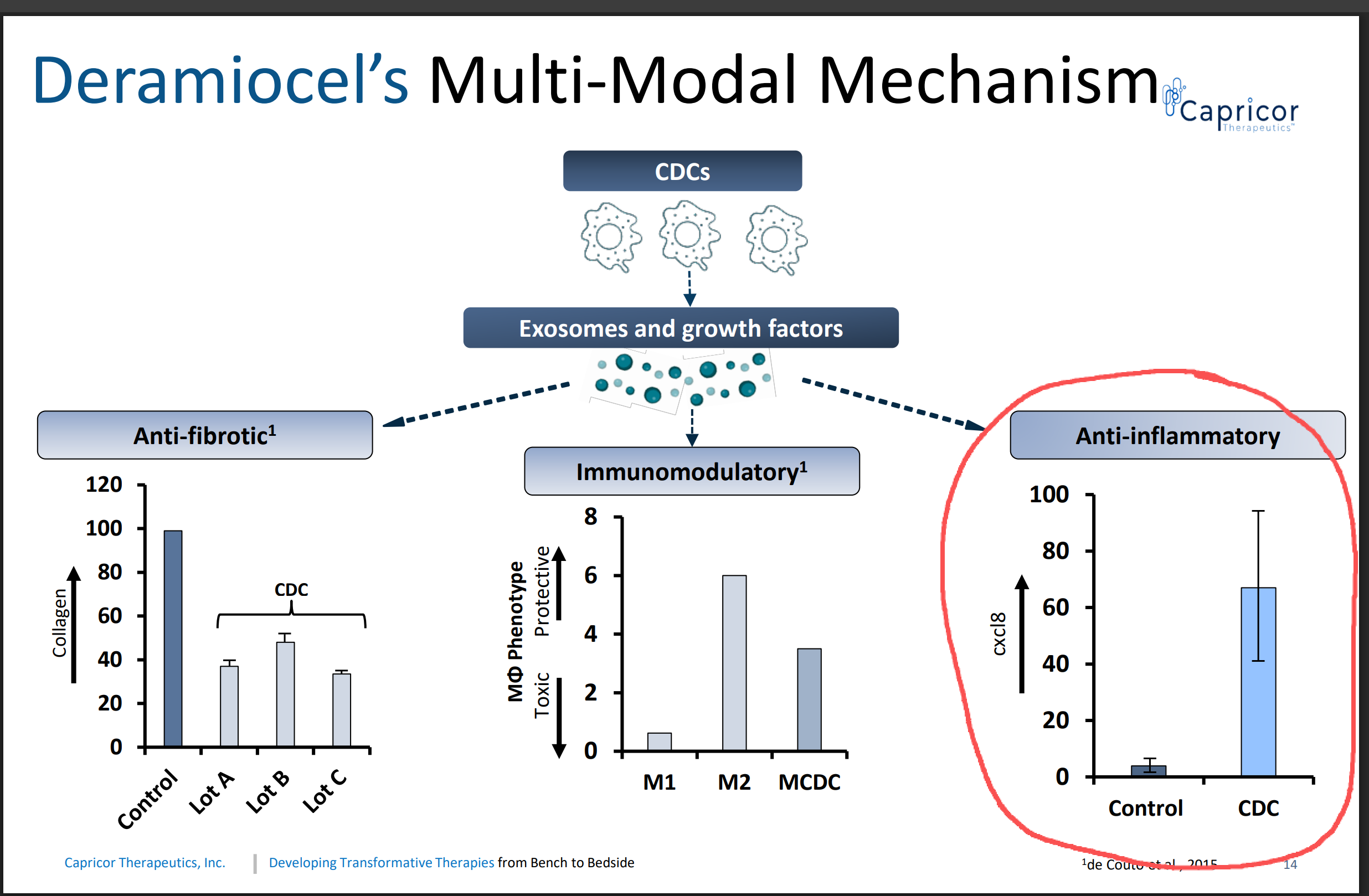
Investor Presentation – October 2025
-
At the October 2025 ASIC meeting, Dr. Eduardo Marbán's own data showed extracellular vesicles (EVs) are pro-inflammatory on cytokine panels, directly contradicting the proposed mechanism.
The CD105⁺/CD45⁻ phenotype is not special. This surface marker profile is a generic result of mesenchymal cell sorting, not a mechanistic explanation for therapeutic activity. It describes what the cells are, not what they do.
Stem cell transplantation has universally failed in DMD. Systemic cell delivery faces insurmountable challenges of scale (skeletal muscle is 30–40% of body mass), vascular transit (<0.1% reach target tissue), transient engraftment, and immune rejection. CDCs do not solve any of these well-documented problems.
3.3 The Cardiac Science Foundation Is Compromised
CDC technology originates from Dr. Eduardo Marbán's research on cardiac progenitor cells (CSCs/CDCs). Dr. Marbán has publicly distanced CDCs from the broader cardiac stem cell field following high-profile fraud cases involving related cell types. However, CDCs share core biological properties with the discredited CSC lineage, and the distinction between CDC and CSC remains unclear in the literature.
4. Clinical Evidence: A Pattern of Failure and Reframing
4.1 ALLSTAR (Phase 2, Post-MI; NCT01458405)
The largest controlled trial of CAP-1002, conducted in collaboration with Johnson & Johnson (Janssen Biotech).
| Parameter |
Detail |
| Design |
2:1 randomization (CDCs : placebo); n=134 treated |
| Dose |
25M CDCs, intracoronary |
| Indication |
Post-myocardial infarction |
| Primary endpoint |
Relative change in infarct scar size by MRI |
Result: Complete failure. No statistically significant difference in LVEF or scar size between CAP-1002 and placebo. The trial was halted at a pre-planned 6-month MRI interim analysis. J&J terminated its partnership and returned all rights to Capricor.
Significance: ALLSTAR was a rigorous trial — lower α (0.025 one-sided), formal multiplicity adjustment, predefined futility rule, and an objective MRI-based endpoint. Its failure is the single cleanest read on CDC efficacy and should anchor any assessment of subsequent, less rigorous studies.
4.2 HOPE (Phase 1/2, DMD; NCT02485938)
| Parameter |
Detail |
| Design |
1:1 randomization; n=25 |
| Dose |
75M CDCs, intracoronary |
| Population |
≥12 years, DMD with cardiomyopathy |
Key concerns:
- All patients were on systemic glucocorticoids for >6 months prior to screening, with potential dosage imbalances between arms.
- Responder analyses for PUL were conducted post hoc, excluded patients with missing data, and did not adjust for baseline imbalances.
- All patients with available samples had elevated CK-MB (a cardiac injury marker) at 6 and 12 months, arguing against meaningful cardiac benefit.
- Cardiac TEAEs included atrial fibrillation in the treatment arm.
4.3 HOPE-2 (Phase 2, DMD; NCT03406780) — The Pivotal Dataset
| Parameter |
Detail |
| Design |
1:1 randomization; n=20 (of planned n=84) |
| Dose |
150M CDCs IV, quarterly for 12 months |
| Population |
Boys ≥10 years, non-ambulant, moderate upper-limb impairment |
| Primary endpoint |
Mid-level PUL 1.2 at 12 months |
4.3.1 The Primary Endpoint Failed Under the Prespecified Model
The Statistical Analysis Plan specified a parametric MMRM framework. Under this model, the primary endpoint — mid-level PUL 1.2 at 12 months — did not reach statistical significance (Δ = –2.1 vs –4.9; p = 0.08).
4.3.2 Post-Hoc Reanalysis Rescued Statistical Significance
Capricor argued the MMRM violated normality assumptions (Shapiro-Wilk p = 0.003 in the treatment arm), driven by a single extreme outlier and high inter-patient variability with only 8 treated patients. A post-hoc non-parametric rank-based model was applied, yielding p = 0.01. This reanalysis was not prespecified, was not adjusted for multiplicity, and was reported 18 months after topline data.
4.3.3 Suspicious Data Patterns
- On PUL 2.0 raw scores, there is no meaningful separation between arms through 9 months, followed by a sudden, synchronous decline in the placebo group between months 9 and 12.
- This placebo decline coincides with a simultaneous spike in creatinine levels across placebo patients, with minimal standard deviation — a statistically improbable pattern in a 12-patient arm.
- One placebo patient (S10) has missing data during this critical period.
- Treatment benefit appears driven primarily by placebo deterioration, not by improvement in the CAP-1002 arm.
4.3.4 Methodological Comparison: ALLSTAR vs. HOPE-2
| Aspect |
ALLSTAR |
HOPE-2 |
| Endpoint type |
Objective imaging (MRI) |
Subjective functional scale (PUL) |
| α threshold |
0.025 one-sided |
0.05 two-sided |
| Multiplicity adjustment |
Formal |
None |
| Futility rule |
Prespecified, conditional power |
None |
| Statistical model |
Prespecified parametric |
Changed post-hoc to non-parametric |
| Sample size |
n=134 |
n=20 (76% below plan) |
HOPE-2's design is far more permissive at every level. Where ALLSTAR's rigor produced a clean null result, HOPE-2's small sample, subjective endpoint, and post-hoc model switching produced a marginal positive that the FDA subsequently rejected.
4.3.5 Shifting Narrative Across Readouts
Capricor's communications evolved through four distinct phases, each redefining what constituted "success":
- July 2019 (Interim): Reported nominal PUL 2.0 gains (p = 0.039) from n=12 per-protocol, unadjusted for multiplicity. Omitted PUL 1.2 mid-level results entirely, citing FDA's preference for PUL 2.0.
- October 2019 (WMS): Expanded interim (n=20 ITT) focused exclusively on PUL 2.0, omitting all PUL 1.2 data. No α-spending or multiplicity control reported.
- May 2020 (Topline): Primary endpoint (PUL 1.2 mid-level) failed at p = 0.08 under prespecified model. Emphasis shifted to exploratory PUL 2.0 (p = 0.05, nominal) and cardiac measures (LVEF p = 0.004, nominal).
- September 2021 ("Final"): Claimed the trial "met its primary endpoint" after applying a post-hoc non-parametric reanalysis (p = 0.01). Announced "71% slowing of decline."
This pattern of retroactive endpoint reframing is a significant red flag for data quality and reliability.
4.3.6 Enrollment Curtailment
HOPE-2 enrolled only 20 of a planned 84 patients. Capricor attributed this to "funding constraints," but the timing aligns with the interim analysis. The company has never publicly disclosed whether the interim analysis indicated futility. Original public communications described the interim as "positive."
4.4 HOPE-2-OLE (Open-Label Extension; NCT04428476)
Only 12 patients remained on treatment through month 36. Efficacy appeared to wane during the treatment gap before the OLE, reinforcing that any CDC effects are transient and maintenance-dependent.
The external comparator for PUL 2.0 and LVEF relied solely on a single-center dataset (Cincinnati Children's Hospital Medical Center), introducing center-specific bias, rater effects, and care-pattern confounds. This same comparator is reused across multiple Capricor analyses.
5. Regulatory Position: The FDA Has Already Said No
5.1 Complete Response Letter (CRL)
The FDA rejected the Phase 2 BLA submission in July 2024. Capricor's principal argument — that the non-parametric reanalysis was statistically sufficient — was not accepted. The CRL effectively required a confirmatory Phase 3 trial.
5.2 FDA Leadership Skepticism
STAT News reported (June 2025) that senior FDA officials, including Vinay Prasad in the relevant review division, were described as "skeptical of the treatment." Disagreements over the Duchenne therapy pathway may have contributed to personnel changes at FDA.
5.3 Clinical Site Integrity Concern
An FDA inspection report (November 27, 2024) flagged investigator Han C. Phan, M.D. (Rare Disease Research, Atlanta) — a HOPE-3 site — for issues including PUL scoring inconsistencies and concerns around concomitant glucocorticoid use across 42 patients. While these findings may not be limited to HOPE-3, the site's exclusive involvement in the Phase 3 trial (not HOPE-2 or OLE) raises data integrity questions.
6. HOPE-3 Outlook and Topline Analysis
6.1 Trial Design
| Parameter |
Detail |
| Design |
Randomized, double-blind, placebo-controlled |
| Enrollment |
~105 patients across two cohorts (A and B) |
| Primary endpoint |
Mean change from baseline in PUL 2.0 total score |
| NCT |
NCT05126758 |
Key structural concern: The FDA-aligned primary endpoint (PUL 2.0 total score) performed strictly worse than PUL 1.2 in HOPE-2, which already required post-hoc rescue. PUL scoring is subjective, rater-dependent, and operates on a coarse 3-point scale (0, 1, 2) per item.
6.2 Cohort A Data Withheld
Phase 3 was conducted in two cohorts. Cohort A completed in Q4 2024. If the data showed a strong signal, there was no reason to withhold it. The decision to wait for combined data suggests Cohort A alone was insufficient.
6.3 Topline Results (Post-Readout Analysis)
Capricor reported "positive" topline results, claiming a 54% slowing of disease progression on PUL 2.0.
However, critical discrepancies emerge:
Endpoint metric was changed without disclosure. The HOPE-3 SAP specifies "mean change from baseline in PUL 2.0" as the primary endpoint. The press release instead reported "% slowing of progression" — a relative metric that inflates perceived effect sizes. It is unclear whether this change was pre-agreed with FDA or adopted post-hoc for the press release.
Deconstructing the 54% claim. Based on the reported bar charts, the treatment arm showed approximately 3.8% LS-mean percentage decline from baseline, versus 8.4% for placebo. The "54% slowing" is computed as (8.4 – 3.8) / 8.4 — a ratio of percentage changes, not an absolute difference.
The absolute treatment effect is ~1.2 points on PUL 2.0 total score (p = 0.029, n ≈ 105). On a scale with a maximum of 42 points where each item is scored 0–2, a 1.2-point difference is within the range of measurement noise for a subjective, rater-dependent assessment. The clinical meaningfulness of this delta is questionable.
Safety signals persist. Topline safety data reported treatment-emergent adverse events consistent with prior studies, including hypersensitivity reactions. Full safety data have not yet been disclosed.
7. Valuation: Liquidation Analysis
Using the Q2 2025 10-Q, we estimate post-failure value via a straight liquidation model:
| Item |
Value |
| Cash & equivalents |
Reported balance less estimated burn through Nov 2025 |
| PP&E |
50% discount to book value |
| Monthly burn rate |
Based on trailing 12-month average (conservative; actual 2025 run rate is higher) |
| Warrants / options |
Excluded (dilutive; would reduce per-share value further) |
Estimated liquidation value: ~$1.62 per share.
With marginal salvage value for the StealthX platform (preclinical, no partnerships), a generous estimate might reach $2.16. Against a current price of $6.43, this implies –66% downside.
8. Risk Factors (to the Short)
- Regulatory surprise: An FDA willing to approve on marginal Phase 3 data (possible under political pressure or rare disease accommodation) would invalidate the thesis. However, the CRL precedent and leadership skepticism make this unlikely.
- Buyout / partnership: A strategic acquirer could ascribe option value to the platform. However, J&J already walked away from CDCs post-ALLSTAR, and no other partnerships have materialized.
- Short squeeze: CAPR is thinly traded with a small float. A positive topline headline — even with weak underlying data — could trigger a technical squeeze before the market digests the details.
- Endpoint acceptance: If the FDA accepts the "% slowing" framing and considers a 1.2-point PUL 2.0 difference clinically meaningful, approval becomes possible despite our scientific objections.
9. Key Personnel and Governance Concerns
- Eduardo Marbán, M.D., Ph.D. (Scientific Founder): Originator of all core CDC science. Author on virtually all foundational publications cited by Capricor. His dual role as academic investigator and company founder creates inherent conflicts in evaluating the evidence base.
- Linda Marbán, Ph.D. (CEO): Spouse of the scientific founder. Limited prior executive experience before assuming the CEO role.
- Suzanne Hendrix, Pentara (Statistician): Previously served as statistician for Cassava Sciences (SAVA), a company that faced extensive scrutiny over data integrity concerns in its Alzheimer's program.
10. Conclusion
The investment case against CAPR is built on converging evidence across science, statistics, and regulatory history:
- CDCs have no plausible mechanism to address dystrophin deficiency — the root cause of DMD.
- The only controlled cardiac trial (ALLSTAR, n=134) was terminated for futility.
- The pivotal DMD trial (HOPE-2, n=20) failed its primary endpoint under the prespecified model, required post-hoc statistical rescue, and exhibits suspicious data patterns.
- The FDA has already rejected the Phase 2 submission.
- HOPE-3 topline results show a marginal absolute effect (~1.2 points on PUL 2.0) repackaged as "54% slowing" through a relative metric not specified in the SAP.
- The company is a single-asset story with no pipeline diversification.
We expect HOPE-3 data, upon detailed scrutiny, to be insufficient for FDA approval. The stock should converge toward liquidation value.
References
- McDonald, C. M., Butterfield, R., et al. (2022). Repeated intravenous cardiosphere-derived cell therapy in late-stage Duchenne muscular dystrophy (HOPE-2). The Lancet, 399(10329), 1049–1058.
- Capricor Therapeutics, Inc. (2025, September 25). Regulatory update on Deramiocel program following Type A meeting. Press release.
- Duan, D., Goemans, N., Takeda, S., et al. (2021). Duchenne muscular dystrophy. Nature Reviews Disease Primers, 7, 13.
- Capricor Therapeutics. (2025). HOPE-3 Topline Data Update. Conference call presentation.
- STAT News. (2025, June 20). Disagreements over Duchenne therapy may have led to ouster of key FDA official.
- ClinicalTrials.gov: NCT01458405 (ALLSTAR), NCT02485938 (HOPE), NCT03406780 (HOPE-2), NCT04428476 (HOPE-2-OLE), NCT05126758 (HOPE-3).
- FibroGen. (2024). Pamrevlumab Phase 3 LELANTOS results. Press release.
Disclaimer: This report reflects the views of the author and is intended for informational purposes only. The author may hold short positions in CAPR. This is not investment advice.