https://open.spotify.com/track/2DuFmqmY2DatBTiWz2tXcF?si=cf9a6d55c15f45bf
Summary
On the 10th, I finished reading Kenzaburo Oe's A Personal Matter for the second time.
On this revisit, there was less of my youthful sexual fantasy over Himiko's state of "having lost the innocent beauty of a young girl without yet reaching lush maturity, stuck in the most tedious stage," and more understanding of the absurdity and helplessness of life felt by Bird, a young man who grew up after World War II. Of course, that's also thanks to the background material Professor Wang Zhongchen provided for us at the end of the book.
The younger generation is full of sexual desire and impulse, meant to express resentment and rebellion against society, yet the characters are mostly the lonely, helpless type, and their rebellion carries a heavy air of decadence. Combining that with how Kenzaburo Oe suddenly felt his Sartre-led existentialist intellectual training had grown pale and powerless—leading him to restudy the French Renaissance humanist tradition and rebuild his own spirit—we can be certain that Bird is modeled on himself. So re-reading the title "A Personal Matter," one layer of meaning is the account of the protagonist Bird's experience from his personal perspective; the second layer is Kenzaburo Oe revisiting his own experience through writing (and headed toward a better place).
Visualization
I used Midjourney to generate images of the characters and scenes, trying to recreate how I pictured the 1970s Japan described in the book.
Bird
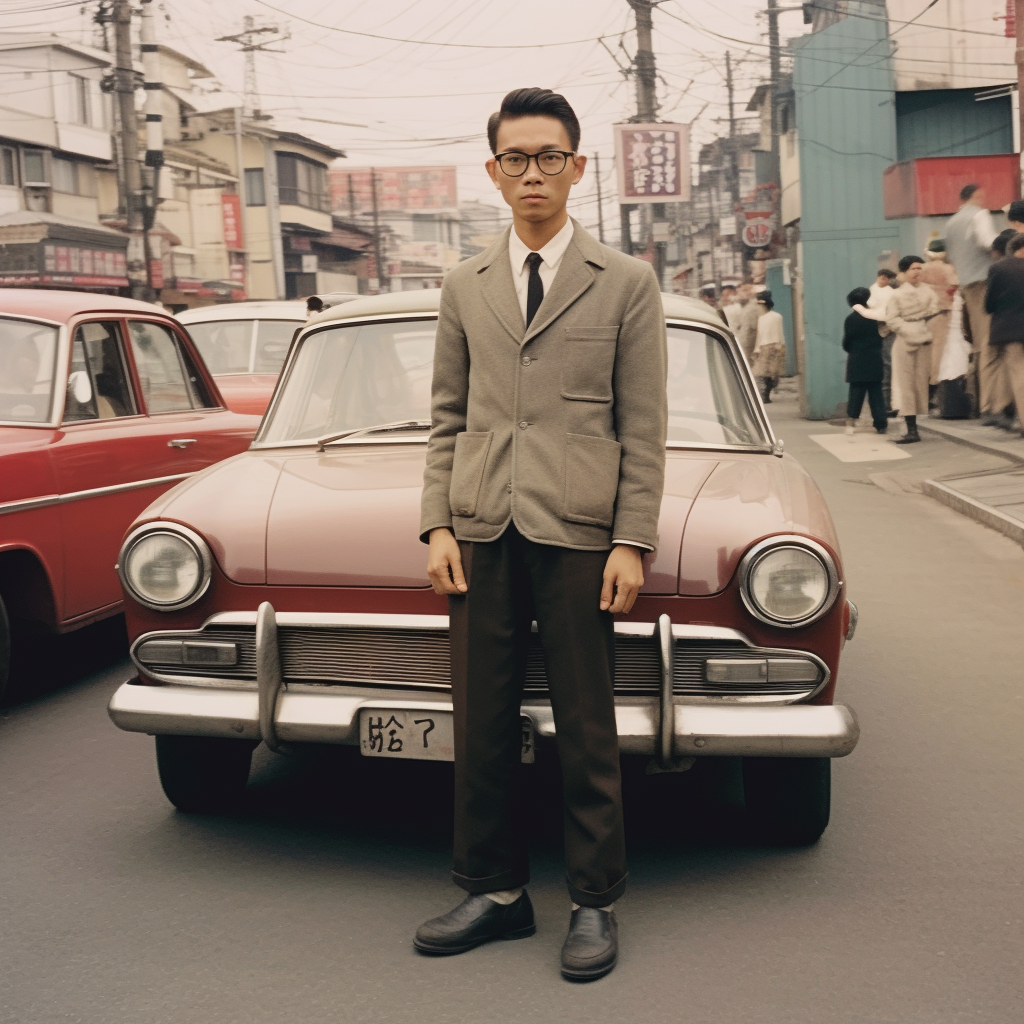
Direct descriptions of Bird include: "twenty-seven years and four months old," "short and scrawny," "a slightly protruding belly," "hunched forward with raised shoulders," "a smooth... curved nose bridge," "eyes full of a dull, gluey light, showing almost no expression," "lips always pulled tight, thin and hard," and "reddish-brown hair sticking straight up toward the sky like roaring flames."
He's pretty slight in build, and given his background as a teacher, he'd naturally be wearing a summer white dress shirt (in the brawl at the beginning it also mentions blood splattering onto his shirt). Still, I feel he should have a kind of "strength hidden in ordinariness" vibe.
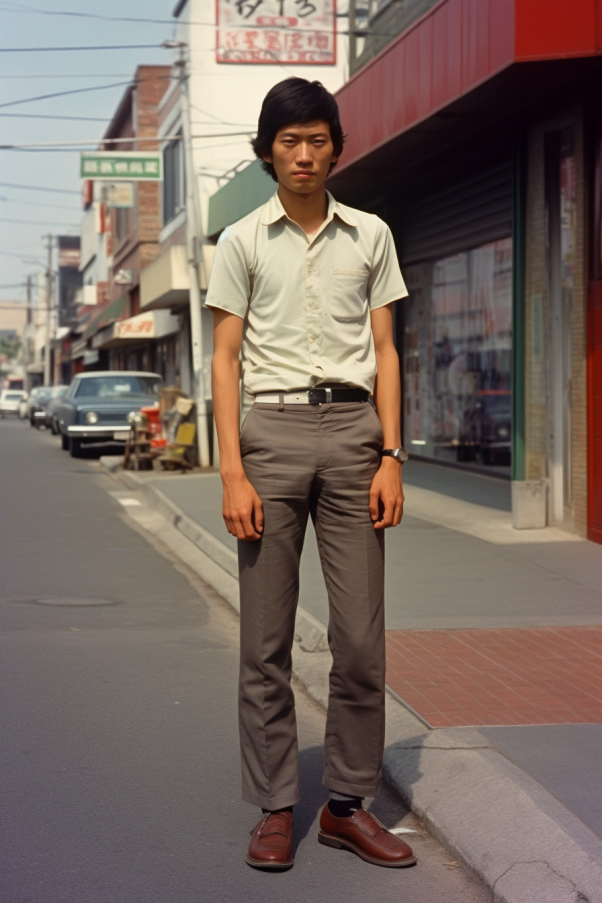
The Nursery
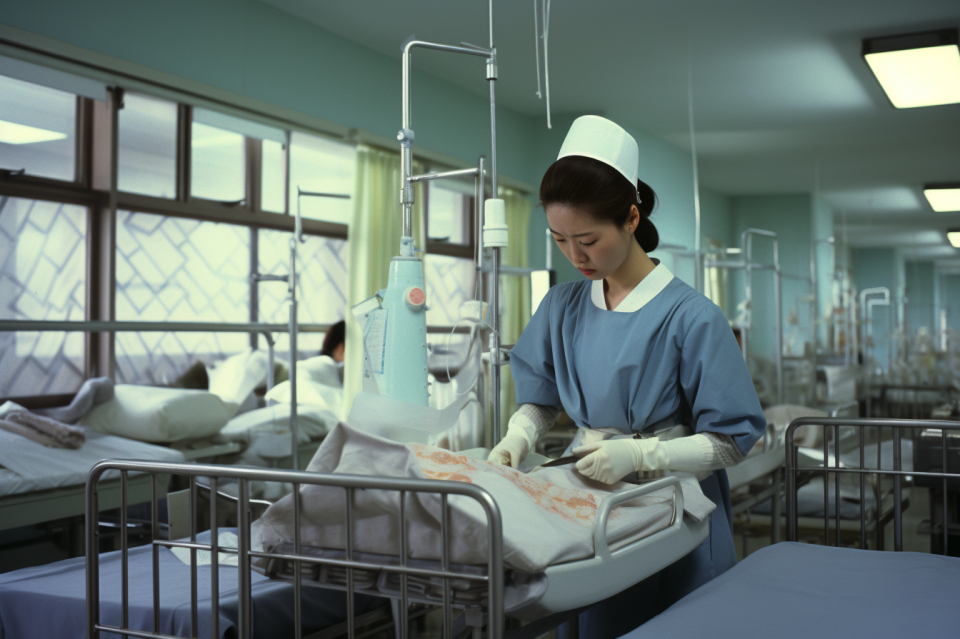
The place that made Bird "dizzy" several times
Side note: Charlie Parker and Dizzy Gillespie were two legendary jazz bebop masters, and Charlie Parker's nickname was Bird—didn't expect time and space to cross like that and have me end up referencing it here
I love this imagery: Bird looking at the nursery glass reflecting the mosaic-patterned square incandescent lights on the ceiling, playing off the green-and-white painted hospital walls to create an uncomfortable, even nauseating sensation. Dizziness and revulsion.
A Japanese Street in Summer
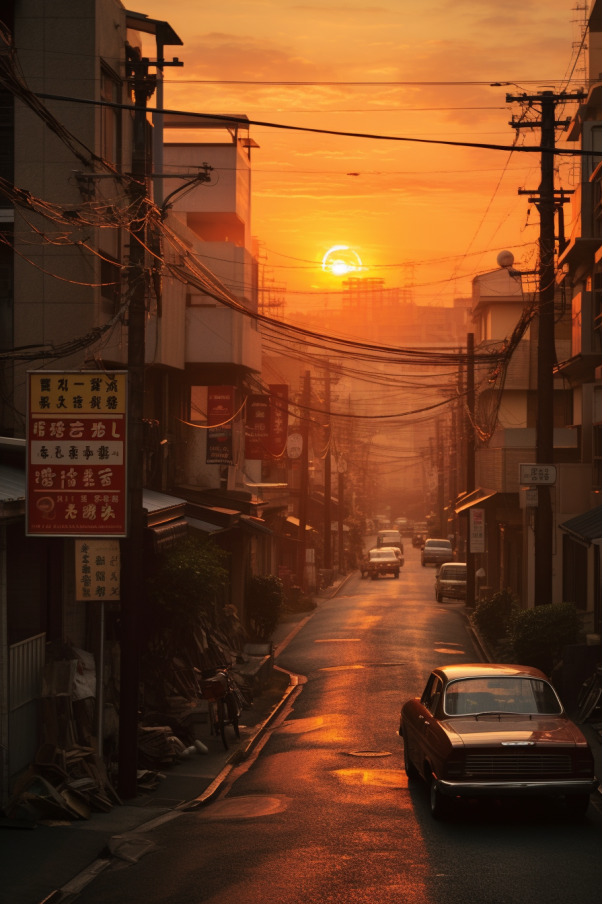
Dusk had deepened, and the early summer heat, like the body warmth of a dead giant, had vanished completely from the air blanketing the ground. Anyone groping in their dim subconscious for the lingering daytime warmth on their skin let out a vague sigh. June, six-thirty in the evening—there were no longer any sweaty pedestrians on the city streets.
I used "sunset" in the prompt, and I'm really happy with how it turned out. A feeling of everything beautiful coming to an end, with just a bit of lingering warmth left.
The Red Sports Car
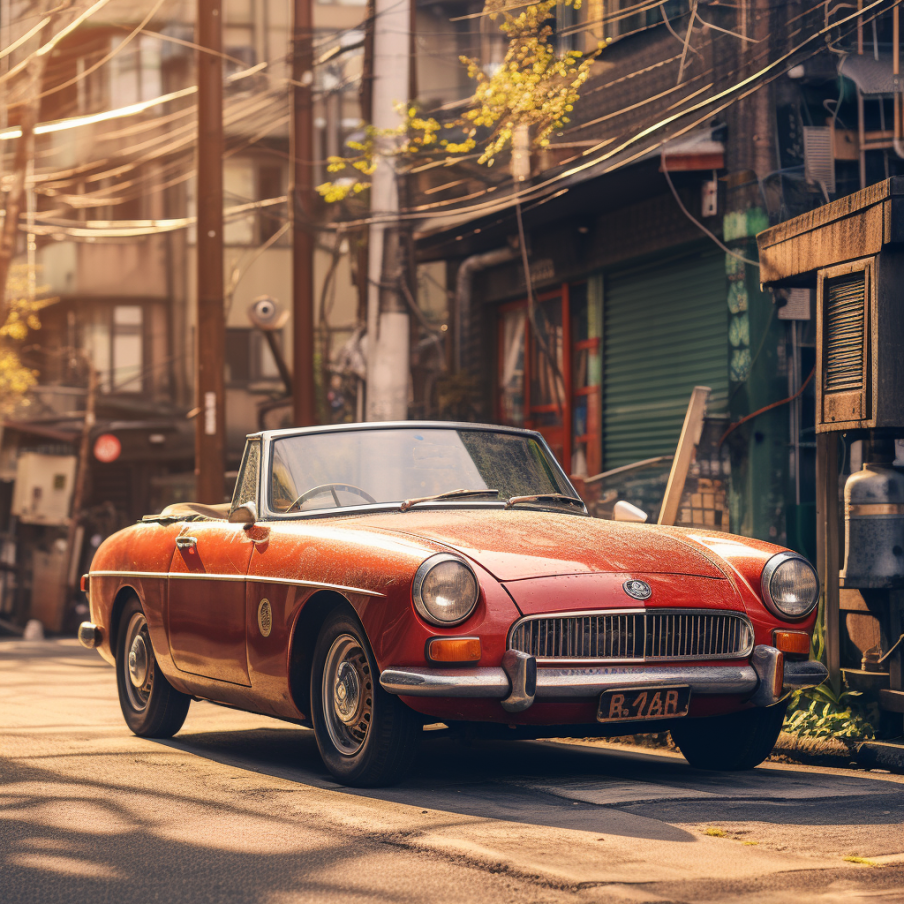
Based off a 1970 MG MGB sports car—I specifically picked an image of a convertible to match the scene in the book where it starts raining and Bird, sitting in the car, wants to pull the top up to keep his baby from getting wet.
I've also started getting a bit of a feel for cars lately and can begin to understand the hobby a lot of my guy friends have. It also reminded me of last year's movie Drive My Car. Though I still don't like driving.
Himiko
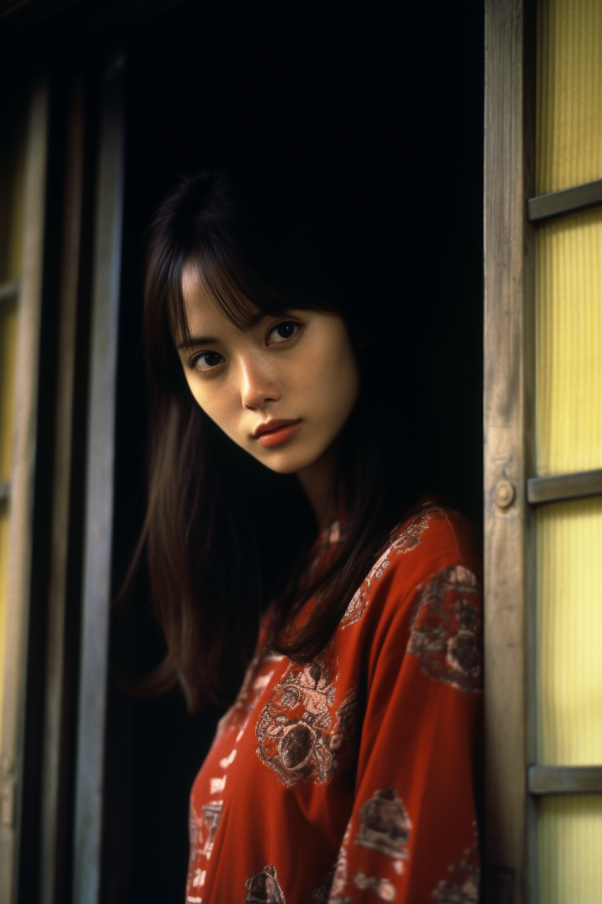
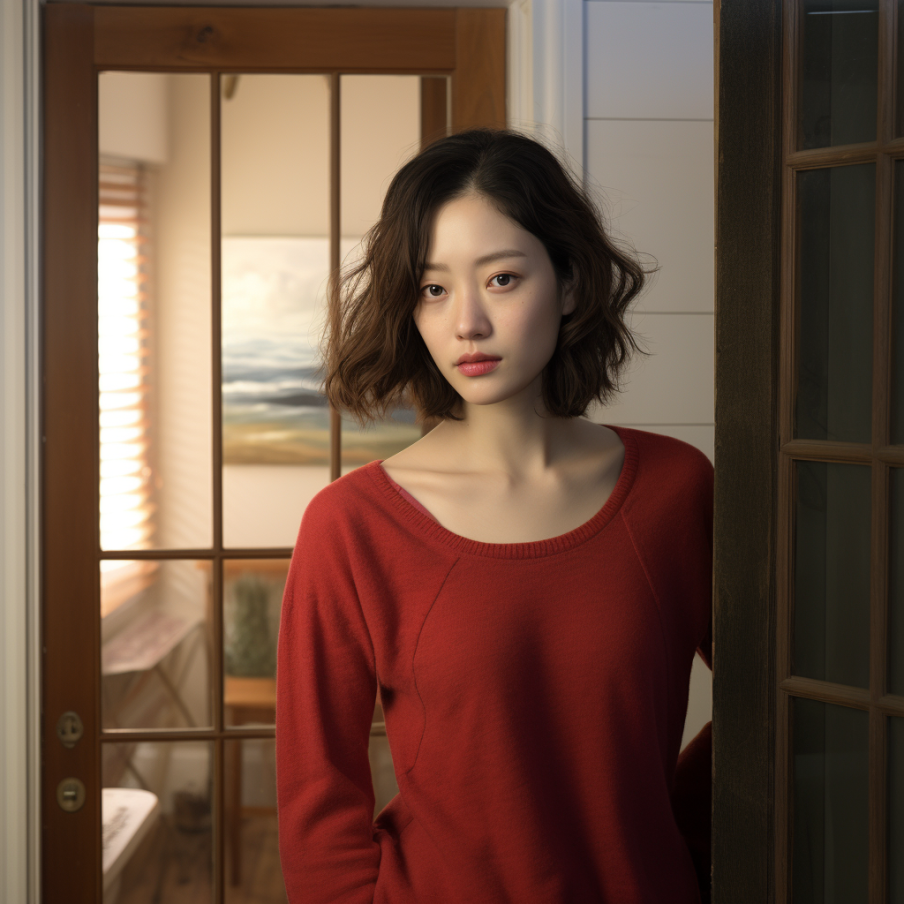
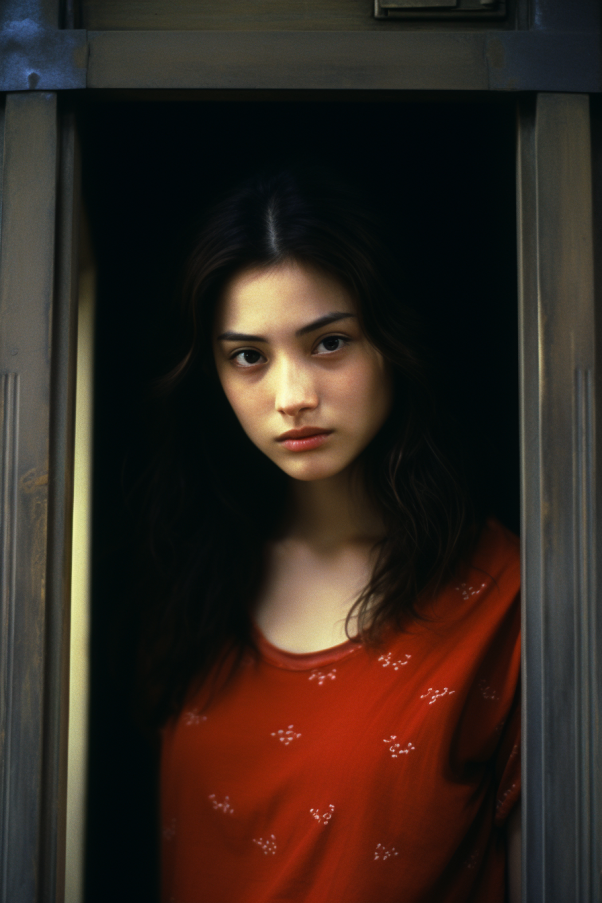
Images for Himiko were genuinely hard to pick. There's actually no description of Himiko's face at all—only "the rounded shoulders, fitting her age so well, revealed by her thick crimson cotton loungewear" and "skin so fair that even the capillaries were clearly visible"—so I didn't have a concrete image of Bird's girlfriend in my head either. In fact, there is no real account of Himiko's appearance; what the story actually portrays is her personality: Independent, strong, self-reliant, emotionally fluctuating, unapologetically open about her sexual desires and non-traditional views on life and relationships. That more-than-physical acceptance she gives Bird is actually something a lot of guys need. And Bird's influence on her changed her trajectory too. It's a mutual interaction.
Inside Himiko's Place
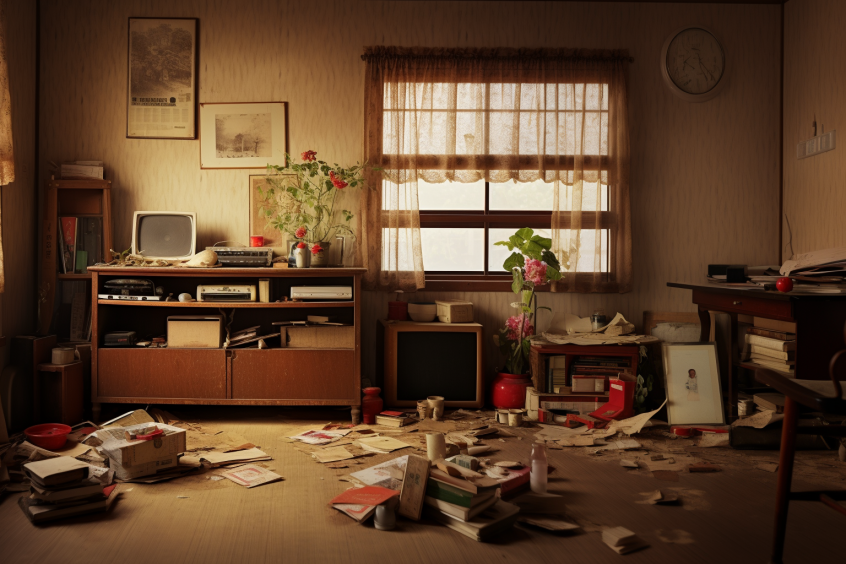
In Himiko's room, on the floor, on the table, on the low bookshelf by the window, even piled on top of the tape recorder and TV, were books and magazines, empty boxes, bottles, seashells, knives, scissors, insect specimens, dried flowers gathered from winter thickets, old envelopes, newly arrived letters—all cluttered in an overflowing mess. Bird hesitated, unsure where to put the liquor bottle. After a moment, he rustled a space clear with his feet and wedged the bottle between them.
The lighting in the living room could actually be dimmer—Bird could only sit waiting in the dark for Himiko to finish her bath.
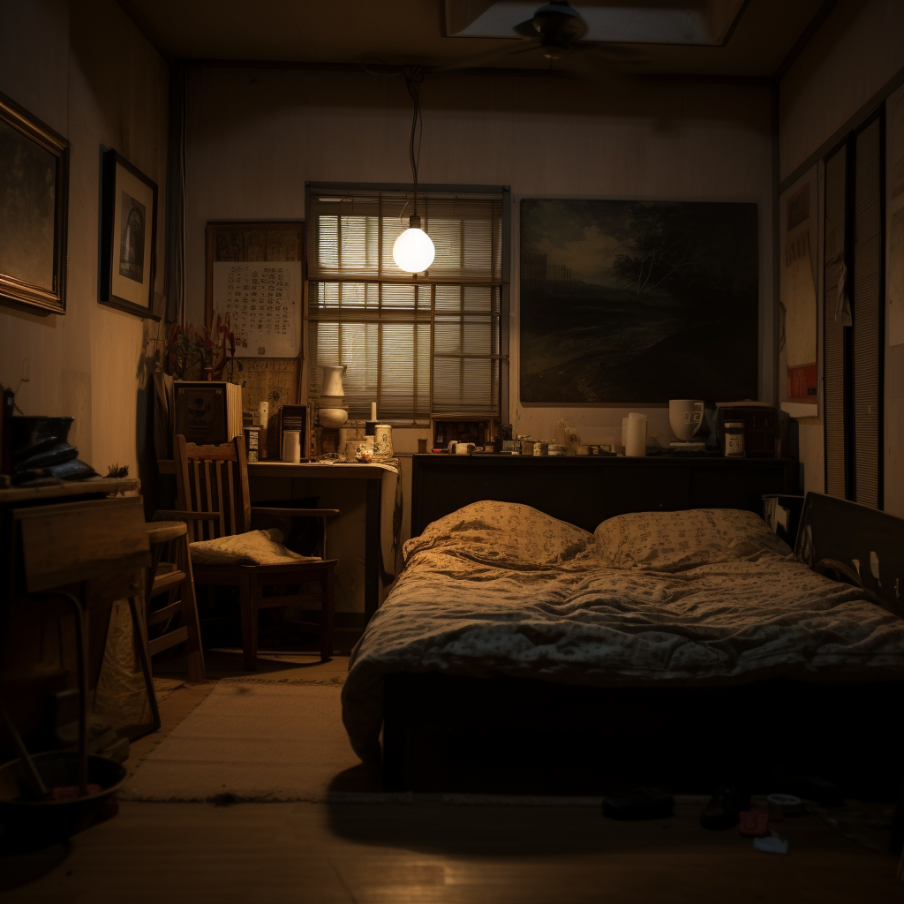
The bedroom itself wasn't really described much.
I kept trying to find a bedroom with that "getting into bed not to sleep" vibe—looking more for a cozy space for a meeting of minds.
Why Do I Like A Personal Matter?
This question lingered in my mind for a long time, and I couldn't come up with an answer.
I won't go on about the surface-level reasons tied to the story itself, including but not limited to the inner voice, the dynamics between the two sexes, postwar Japanese society and its repressive culture, and so on. I like experiencing unique experiences I haven't lived through myself.
When I first read it as a college freshman, what I experienced was a kind of fantasy. A form of escapism. As if I could also become Bird, a young Japanese man living in 1970. Back then, I couldn't clearly picture a 27-year-old man agonizing over the life-and-death decision of his own child—that kind of dilemma felt way too far away from me—yet I was dead set on living inside that gloomy world. I feel like back then I really was caught in that gloomy, defeatist loop in Japanese culture, not hating stubborn self-delusion but being infatuated with it. Thinking back on it now, that was a blurry attitude toward life. I was anchoring my real-life spirit to a fictional object, or rather to a listless mental image.
Looking back at the process of reading this book again now, I realized Bird's experience—carried by the book, with words as indicators and tokens—transformed into a personal "learning experience" of my own. As I read deeper, I didn't escape into that sweltering summer island nation (Shanghai is hot enough as it is); instead, I felt and understood the protagonist's choices, looking for positive takeaways that could inspire me in facing life. For example:
the idea of companionship
Even if we can't spend the night together, I should at least ask her out for a drink.
the responsibility of giving birth
If I don't throw myself into battle right now, then not only will my chance to travel to Africa be lost forever, my child will also have been born only to live a life of suffering.
the thin borderline when making a decision between fantasy and realism
Passing through the noisy magazine stand on the first floor, Bird carefully slipped the map rolled in kraft paper into his outer suit pocket, pressed it against his side with his arm, and walked on. This was the first time Bird had bought a practical map of Africa. Yet would the day really come when he actually set foot on African soil, wearing dark sunglasses and gazing up at the African sky? Bird wondered uneasily. Perhaps at this very moment, his chance of setting off for Africa was being decisively lost—meaning he was now helplessly saying goodbye to the one and only remaining thrilling, nerve-racking opportunity of his youth. And if that were really the case, well... it was already unavoidable.
and the complex, fluctuating fragility of the human mind.
Yet when it comes to the hard labor of my personal experience right now, I am merely digging desperately inside a solitary vertical shaft cut off from the entire human world. I sweat in agony in a dark pit all the same, yet my experience yields not a shred of human meaning. All there is, is hopeless, shameful, revolting digging.
Rather than yearning for the state of life depicted in the book, this time I took on the role of an observer, learning and recording. It was a concrete exercise in thinking. Maybe this aligns with my understanding of aesthetics: beautiful things have to be viewed from a certain distance; the moment you reach out to touch them, the beauty ceases to exist.
Having written up to here, my mind has finally quieted down, and I can finally say goodbye to that chapter of my past. Thank you, Kenzaburo Oe, up in heaven.
Excerpts and Short Notes
Chapter 1
And that thing about to be born into the world
Calling a baby a "thing," yikes...
As long as Bird had not figured out the true meaning of those four weeks of his life, he had not truly grasped the means to keep himself from falling back into misery.
If we don't reflect on parts of our past, we end up repeating the same mistakes
He too was avoiding thinking thoroughly about the lacks and fundamental dissatisfactions that existed inside his own life. Yet those things were undeniably there, which was why Bird still guardedly refused all alcoholic drinks.
Not thinking is a kind of stagnation, no different from death
It was the sound of the glove-soft Italian leather shoes of young men absorbed in their games scraping against the fuzzy floorboards.
Really enjoy this kind of description—feels like looking at a Jeff Knoons artwork
His shirt was stained with blood; if he just walked in the rain for a while, it would look no different from rain stains, wouldn't it?
A kind of disbelief, indifference
Chapter 2
The whole reason Bird wanted to go to Africa was to find, through adventure, disaster, or encounters with new peoples, something far outside safe, mediocre everyday life.
Going somewhere new not to discover the beauty of unfamiliar things, but to run away from the troubles of your current life—those are two different mindsets
questions honed razor-sharp on the whetstone of goodwill and curiosity
Unintentionally planting a willow and getting shade, but in a stabbing way—as if that willow got thrust in like a dagger
while falling into the illusion of hurtling in from somewhere far away
A certain feeling
One eye was restless and cautious, the other gentle and serene.
Heterochromia?
The quiet snicker seeping out of him was just a warped version of his ambiguous smile from a moment ago.
wooo... a dagger hidden behind a smile
The rain had stopped, the wind had died down, and the drifting clouds in the sky were bright and dry—it was a radiant morning breaking free from the dim cocoon of dawn. Yet the fresh early-summer air left every muscle and internal organ in Bird's body utterly exhausted. Gently soothed by the lingering night inside the building, Bird's eyes were now stung by the hard, white, icicle-like glare reflecting off the wet asphalt and the dense street trees.
Using animal-like descriptions for a person fits Bird so well
What a shameful thing the human body is—full of danger, battered, and fragile.
Does the naked body make people feel ashamed?
The doctor's manner carried a subtle yet unmistakable authoritative warmth, and Bird was willing to melt like candy in that heat.
Toffee!!! Makes me want some so bad
To put it more bluntly, for the child's sake, and for the two of you as well, it would be better if he died sooner rather than later.
god DAAMN
My son's head is wrapped in bandages like Apollinaire's; he was wounded all alone on a dark battlefield completely unfamiliar to me. All I can do is bury my son the way one buries the war dead.
A kind of pain
Chapter 4
The whiskey was no longer strong, no longer mellow—it didn't even taste bitter anymore. "Bird, do you always drink whiskey this fast and this much? It's like you're drinking black tea—even with black tea, you couldn't drink it like that when it's hot."
Reminds me of some friends who drink liquor like water (lol
Chapter 5
"Do you always buy this many lemons?" Bird asked. Having put his trousers back on and buttoned his shirt all the way up to the collar hook, he regained a measure of composure.
Such a Japanese post-sex detail
Chapter 7
broke free from self-obsession
Mmm
Chapter 8
If I had ever fought in a war, I could answer clearly whether I'm brave or not.
As if war could actually measure how brave a person is
The crib stood there, and to Bird it looked like a tiny white coffin.
What a striking metaphor—dead before even being born, falling before the campaign even gets underway, huh?
Chapter 9
For Bird, driving out of the school that had just fired him in a half-worn, grimy red sports car, how miserable it would have been without the joking atmosphere this student brought.
Come to think of it, they're both sports cars, yet a well-maintained sports car and a beat-up one reflect wildly different states of life—the latter conveys more of a sense of collapsing midway through one's mission. (Wait, how did I use two Chu Shi Biao references in a row?)
Just as a bee gives off the scent of honey all over, the young man reeked of sharp gasoline.
Contrasting description
People like you, who start feeling they have no rights at all in the real world, end up killing themselves.
Signs of suicide
A stone-hearted villain or an unyielding saint—you have to pick one of the two.
Black and white, huh—that's a choice too
Chapter 10
Then quoted a line from Macbeth in English: "'You mustn't think like that,' Bird, 'doing so will drive you mad.'"
Artsy vibes
But this really is only my own business—entirely my own personal matter.
First time tying back to the title: my own business = a personal matter. There's a defensive attitude toward the outside world here
From my own experience, I believe that as long as it involves other people, there is never such a thing as completely fruitless suffering.
That's something I believe too—human-centered; whatever feels painful to one person gets a little easier to bear when two people are together
He tried to recall sleeping in the same bed with his wife during their first year of marriage, yet his memory seemed to misfire and actually turned a bit hazy.
A rusty feeling
He knew that right now, aside from the baby, he could face any other event with calm detachment. That said, Bird thought in agony, out of all the people in Tokyo who aren't shackled to a deformed infant, not a single one of them would envy me.
We don't want to see our own child born deformed, yet when we see someone else's child born deformed, we expect them to take responsibility
Chapter 11
Bird stayed warily silent, forcing an ambiguous smile while struggling to hold back the suffocating, shameful wave of disappointment surging from his chest up into his throat.
Straight excerpt
"Take some sleeping pills with whiskey and go to sleep—there's no need to wait for the phone anymore anyway," Himiko said with infinite tenderness.
Whoa, this "infinite tenderness" feels way too lovely. What kind of tenderness is infinite? Makes me think of drinking milk
Bird realized that he had only acted recklessly a moment ago to resist the doctors operating on the baby—that is, to resist them forcing him to spend the rest of his life saddled with a child with a head defect—and as for what would happen afterward, he hadn't thought about it at all.
Taking things one step at a time is an iterative method—not necessarily for everyone, including things like step size and iteration speed.
When Bird and Himiko's sports car reached a wide intersection, they were stopped by a traffic light. It was one of the huge ring roads circling the metropolis, and Bird peered anxiously in the direction they needed to turn. Dark clouds hung low in the sky, and a damp wind picked up, rustling through the dust-coated treetops. The light turned green, strikingly vivid beneath the gloomy sky, and Bird felt drawn in that direction. Right now, Bird was protected by the same traffic light as people who had never once in their lives harbored a single thought of murder—and he felt a strange sense of incongruity.
City description
Chapter 12
In the shared world of all those people outside of me, the one common time they all share moves forward, and everyone in the world feels an impending calamity drawing near together. Yet all Bird cared about was the bassinet holding the deformed infant that ruled his personal fate.
There's no "greater self" anymore—at this moment, only the "small self"
Chapter 13
Still, to survive in real life, it seems you ultimately can't help being bound by the orthodox way of living; even if you deliberately want to fall into the trap of self-deception, without realizing it, you have no choice but to reject it. That's just how it is, I guess.
Maybe in the end we'll still get assimilated by the orthodox way of living, but not today
You can survive in real life without doing that too, Bird. There are people who, all the way until they die, hop like frogs from one deception to the next.
Animal analogy
Commentary: Choosing "Coexistence," the Non-"I" Narrator, and Rebuilding the Humanist Tradition
The writer Yukio Mishima also criticized this ending—something Oe even wrote into another novel later (Letters to the Years of Nostalgia). According to Kiyoshi Kasai's analysis, Mishima was mainly dissatisfied that Oe used Bird's sudden change of heart to easily dissolve the antinomy between a character's understanding and actions—a dilemma that Mishima himself had struggled with for a long time without finding a way out.
I can understand Mishima's argument; writers back then really had a deep mutual appreciation for one another
I like ending a novel with dialogue—it feels great.
Noted—that abrupt cut-off that leaves you wanting more